Friday, May 7, 2010

Are Gardens Natural?


The natural and sustainable gardening movement is all the rage the days, and for good reason. Gardens represent a golden opportunity to create ecologically productive areas in a time of great environmental decline. But all the talk about sustainability raises the question: are gardens ever really natural? And if not, what does that mean for gardeners trying to be sustainable?

The very idea of a garden implies human intrusion. No garden is natural in the pure sense of the word, because no garden is permanently self-sustaining. Even Beth Chatto’s revolutionary Gravel Garden—which has never been artificially watered —would disappear in 30 or even 100 years from now without human input (pictured above). Nature changes constantly. Left alone, most gardens in temperate zones would end up as woodland.

Gardens are time arrested. The very acts we perform while gardening—watering, pruning, weeding, replanting—are acts against time. All gardening is an attempt to halt ecological succession and freeze it at a point that pleases us aesthetically. Gardeners are like referees, preventing plants from engaging in the warfare they would wage if left alone. Our obsession with benign happy flowers has blinded us to the barbarous combat taking place outside our doors. Plants smother, steal, poison, and invade their neighbors. While we may be oblivious to this conflict, we are nonetheless a part of it: gardeners ultimately pick which side wins.

If gardens are not natural, should we despair? Martha Schwartz, the celebrated and controversial American landscape architect said at a recent lecture, “We view the landscape much as the Victorians viewed women: as either saints or whores.” In an essay called “I HATE NATURE,” Schwartz goes on to say that Americans still exalt a mythical wilderness out there somewhere (the saint) and denigrate any man-made landscape (the whore). This mythology means we don’t see the potential of man-made landscapes to create ecologically productive landscapes. Schwartz writes:

“Our American wilderness paradigm keeps us from developing a clear idea about how to resolve our human activity upon our landscape and how to develop an attitude that can resolve this dilemma constructively. The Dutch, possessing a culture that is clear-eyed about the fact that their native landscape is a man-made artifact, have a much more pragmatic approach to building and development, resulting in healthier and more sustainable environments.”


So what should we do? My suggestions are simple. First, we drop the mythology that nature exists “out there” in some national park and understand that the human landscapes we inhabit everyday—the parking lots, streets, cities, and suburbs—are really all the nature we have left. Once that dirty little truth sinks in, we can stop treating the man-made landscapes as something to hold our nose and pass by, and start repairing the natural systems within it. The same industrial drive that conquered and obliterated the wilderness can lay the groundwork for recreating it within human landscapes.

Second, we make peace with time. Gardening is ultimately a conversation with time. All of our pruning, mowing, weeding, and planting are acts of defiance against the march of time. My suggestion is not to stop gardening, but rather engage with the natural processes working within our garden. Loosen up that landscape. Allow a little self-seeding to happen. Connect with the seasons. Use plants that channel the ephemeral such as light catching grasses or perennials that emerge and die. Understanding the beauty of the ephemeral opens us to see ourselves in time rather than against it.

Wednesday, May 5, 2010

Olmsted in the Jungle

Was the Father of American Landscape Architecture also the Father of Temperate Tropicality?


One of the many trends in garden design these days is the resurgence of the tropical garden, particularly for northern gardeners in temperate zones. Several books have been written on how to create a tropical looking landscape by using large-leafed hardy plants. So I was particularly psyched to come across these quotes from Frederick Law Olmsted, Sr, the creator of Central Park in NY and the father of American landscape architecture.

Rhodeside Harwell principal and Olmsted scholar, Faye Harwell, dug up these quotes for me as a part of an Olmsted restoration project we are currently working on.

During a voyage through Central America in 1863, Olmsted writes about his absolute delight in the tropical landscape he encountered. These are delicious quotes:

“I have never had a more complete satisfaction and delight of my love of nature than I had yesterday in crossing the isthmus. You will remember that I always had a reaching out for tropical effect, but I found the reality far beyond my imagination. … the scenery excited a wholly different emotion from that produced by any of our temperate-zone scenery…excited it instantly, instinctively and directly. …It rests upon a sense of the superabundant creative power, infinite resource, and liberality of Nature –the childish playfulness and profuse careless utterance of nature… .after my excitement was somewhat tempered, I naturally fell to questioning how it was produced, and whether, with materials that we can command in the temperate regions we could to any marked degree reproduce it…

By selection and special treatment, we can then produce trees, which, seen at a distance of a couple of hundred feet, shall lead a man to say, “I have seen such trees before only in the tropics”. …The length of stem and smallness of head is more than I had supposed, often more marked than I had supposed, I mean at a distance, the trunk frequently is imperceptible, and you see the head apparently floating unsupported. The trees growing in this way are not palms…but in their foliage so nearly like the Ailanthus that at no great distance (as a landscape painter would depict them) you would not know them apart, at least an average observer would not.”

There are all sorts of other vines….Very often it seemed as if hundreds of cords (1/2 inch) were stretched from every part of the great spreading tops of trees, fifty to a hundred feet to the ground. All large trees have strained themselves to the utmost to get their foliage away from the smothering density of the ground-growth….For tropical or tropic-like scenery you must get the utmost possible intricacy and variety…”

Later in the same journey/same letter Flo writes:

‘Off Cape Corrientes, October 6th…

What I chiefly feel…is the particular beauty in tropical landscape which is due to the frequent cavernous depths of shade…the umbrella-like trees, overhanging dense undergrowth and the vines making a drapery, all natural ravines and cliffs of rock and caverns of rock, which form the characteristic topography of this coast…’

Panama, September 26,1863; Letter to Ignaz Anton Pilat (head gardener at Central Park from 1857)
The Papers of Frederick Law Olmsted, V 5, pages 85-92.

Tuesday, May 4, 2010

China Sweeps American Landscape Architecture Awards


Rising Star Yu Kongjian’s Radical Vision

Design firm Turenscape in concert with Peking University Graduate School of Landscape Architecture virtually swept this year’s ASLA awards, winning an unprecedented three of the twelve design awards, including the prestigious Award of Excellence and two Honor Awards. The group beat out the hugely popular Highline, New York’s elevated rail park, anticipated by many to win this year’s top award.

All three of the winning projects were large scale, regenerative landscapes that transformed formerly degraded sites into lush, public parks. “This is very powerful,” wrote the Awards jury for the Shanghai Houtain Park, built on a former brownfield. “It’s full of the right messages of our profession. The scope is exquisite. The presentation is excellence. Shanghai never has a blue sky, and recognizing this kind of sustainable project in that context is important.”

Lead designer and professor of landscape architecture Yu Kongjian has long worked to bring attention to China’s impending environmental crisis. Yu views landscape architecture as “the art of survival, not an art of entertaining and gardening.” Awarded ASLA awards eight times since 2002, Yu is a rising star in the world of landscape architecture. In 2007, Yu won an Honor Award for The Red Ribbon in Tanghe River Park, a project that Conde Nast Traveler named as one of the seven modern architectural wonders in the world.

A Different Kind of Park

Yu has long advocated for a different kind of public park: “Why can’t we use agricultural plants, crops, wild grasses, and fruit trees to decorate cities and parks? They are equally beautiful but yield fruits and demand little attention."  Yu's love for wildness is balanced by an appreciation for the agricultural and industrial heritage of a site.  The winning projects frequently use the concept of agricultural terraces and rice fields to create ecologically productive landscapes.


Shanghai’s Houtan Park uses wild grasses and crops as a water-filtering machine, cleaning 2,400 cubic meters of water a day. “There is a beauty in wild grasses,” says Yu. “We don’t see it because we have a twisted aesthetic, taking natural things to be lower class. We are addicted to city beautification: uprooting agricultural crops and trees on the land, building cities, and importing expensive and fruitless garden plants.”

Yu goes on to make an analogy: “It’s kind of ludicrous and harmful feudalistic aristocratic aesthetic. Like when we bound women’s feet and still viewed it as beautiful and elegant. We now are binding the feet of nature.”

To view more about the winning projects click the links below:

Shanghai Houtan Park: Landscape as a Living System

The Qinhuangdao Beach Restoration: An Ecological Surgery

Tianjin Qiaoyuan Park: The Adaptation Palettes

Thursday, April 29, 2010

Five Best Plants to Attract Wildlife


Never thought of your garden as a wildlife preserve?  Well, it may be time.  The statistics about human impact on nature are grim.  Consider a few: America grows by 8640 people per day, and we sprawl across an additional two million acres per year (the size of Yellowstone Park).  The total paved surface of the country is the size of Missouri, and our non-paved surfaces are mostly lawn and sterile plantings.  What's left of our woodlots and forests are invaded with 3400 species of alien plants like bittersweet, honeysuckle and privet that have consumed 100 million acres of land (the size of Texas).  In the lower 48 states, humans have converted 54% of the total land into cities and suburbs, and 41% into various forms of agriculture.  That's an astounding 95% of total land dedicated to man-made use.*

Nature no longer happens somewhere else. Gardeners represent the last best chance to reclaim some of our lost biodiversity.  Our local animals need native plants--preferably lots of them in contiguous and connected areas--to survive and reproduce.  While I love many Asian or European ornamentals, they support only a tiny fraction of the wildlife that natives do.  For example, a Kousa dogwood (Cornus kousa) supports no insect herbivores while our native flowering dogwood (Cornus florida) supports 117 different species of moths and butterflies.

So what should you plant?  Turns out, not all native species are equal.  Some plants sustain much more diversity than others.  University of Delaware professor Douglas Tallamy has studied eastern native plants and documented the different species they host.  Check out this list of five SUPERPLANTS that support wildlife. 

1. Oak Trees (Quercus)
Oak trees top the list for the total number of species they host.  They support an astounding 534 species of butterflies and moths, nearly five time the amount of a Beech tree.  In addition, their acorns provide an abundant food source for small mammals and birds.  Oaks have been diminishing in forests as a result of fire suppression, all the more reason to add one to your yard.  Plus, oaks are a beautiful and elegant, providing shade in the summer and allowing light in the winter (great for energy efficiency).  Try an underused oak like the stunning Scarlet Oak (Quercus coccinea) for fall color, or the Nuttall Oak (Quercus nuttalli) for vigor and ease of transplant. 

2.  Goldenrods (Solidago)

Goldenrods support the highest number of moths and butterflies of any herbaceous species in the study, a whopping 115 different species.  They are also an important nectar source for native bees and insect pollinators.  Wait, don't Goldenrods cause hay fever?  No.  It gets blamed for it because it blooms at the same time as Ragweed.  Most goldenrod species are drought tolerant, low maintenance, and have a long season of bloom.  Try a Goldenrod cultivar like 'Fireworks'  or 'Little Lemon' for a late summer show.

3.  Black Cherry (Prunus serotina) image from mobot.org

Black cherries are rare in the nursery trade, mostly because they are considered a weed for so many years.  But Black Cherries are among the most ecologically productive plants in the U.S., supporting an astounding 456 different species of moths and butterflies.  This tree is a veritable food court for wildlife: their beautiful white blooms in April provide nectar for bees and other pollinating insects, their fruit provides food for birds and small mammals, and their trunks are favorite foraging ground for woodpeckers.  Plant Black Cherries along the border of your property, preferably contiguous with other trees and shrubs to maximize the wildlife impact.  If you can't find tree sizes in the nursery, don't fret.  Plant denser groups of smaller saplings for a lush and informal hedge row.  Here is a link where you can get seeds.

4.  Asters
Asters are second only to Goldenrods in terms of the number of moths and butterflies they support (112 different species!).  American asters are among the most colorful and showy of all native perennials.  Don't even bother with Asian varieties; the American natives are every bit as intense, drought tolerant, and easy to grow.  Plus, we are spoiled for choice.  The New England Aster (Aster novae angliae) are great for massing, the Wood Asters (Aster divaricatus & cordifolius) are good in the shade, and Smooth Aster (Aster laevis) are great for interplanting among grasses.  My personal favorite are the Aromatic Asters (Aster oblongifolius) like 'October Skies' (pictured) and 'Raydon's Favorite.'  Compact (18-24"), vigorous, and an explosion of mid-autumn color. 

5. Willows
One of the most under appreciated shrubs in America turns out to be one of the most ecologically beneficial ones.  Willows form large shrubs or small trees that stabilize streambanks, remove pollution from water, and provide food for as many as 455 different moths and butterflies.  Our colonial forbears used willows for baskets, building construction, and fencing, but  we've all but forgotten this amazing shrub.  It's not only practical, but beautiful.  Bluestem Nursery is the authority on the many different uses and varieties of willows.  Consider a willow for its steely blue leaf color, or for its outstanding stem color that rivals Red Stem Dogwoods.  Bluestem Nursery has catalogued just a few of the many uses for these plants. They're incredibly fast growing, too.  If you want an instant hedgerow, or a living fence (see picture) this is your plant.

(Statistics from Bringing Nature Home: How Native Plants Sustain Wildlife in Our Gardens by Douglas W. Tallamy.)

Tuesday, April 27, 2010

Botanicals for the Green Revolution: The Prints of Angie Lewin


Angie Lewin is the artist for the green revolution.  Not since William Morris has an artist combined patterned abstraction with horticultural specificity.  Her hand-made prints show seed pods and grasses, clouds and moonlight, islands and cliffs.  Her linocuts and wood engravings are both specific and universal, a quality that has made her one of the most demanded printmakers in England.

Angie was not always strongly connected to the natural world.  For years Angie lived in north London as an illustrator.  When she and her husband decided to buy a holiday cottage on the coast road in Norfolk, everything changed.  The clifftops and saltmarshes of the North Norfolk coast inspired Angie to return to print making, a discipline she had studied in graduate school.  Angie had previously studied garden design in her thirties, but found it took the joy out of gardening.  But it did open her eyes to plants.  "I became fascinated by the structure of plants," says Angie, "especially those that were about to flower or had flowered already."

Her style is recognizable: the colors are a retro palette, and the arrangement is a mix of arts and crafts and mid-century modern.  But her eye for horticultural detail elevates her designs.  In her prints, you can feel the connection between plant and place, and its this element that makes her work strikingly original.  You get a sense from her work that if you see the plant well enough, you will know the larger landscape.  Though nature is abstracted, the ecology is still present. "I like looking at the landscape through the plants," Angie says.   

Goatsbeard, dandelions, cow parsley, fennel, and sea lavender--Angie is able to turn gardener's weeds into expansive landscapes.   The process is laborious and time-consuming.  For each print, Angie begins by sketching.  The sketches become detailed sketches, which then get cut into the wood.  Each color necessitates a separate block, each of which takes up to a week to cut.  If she makes a mistake while cutting, she has to start from the beginning.  The final piece is printed on delicate Japanese paper, one block at a time.  Since everything is done by hand, Angie only runs small prints.  "I have so many sketches that I'm always keen to move on to the next print."

The end results have attracted attention.   Angie's prints have donned the cover of garden writer Noel Kingsbury new book, Natural Garden Style.  Kingsubry has long trumpeted the value of the structure of plant, not just its bloom or color, so her art was a good philosphic fit.  In addition, Angie has completed covers for Leslie Geddes-Brown's Garden Wisdom and Jeremy Page's Salt.  Author Leslie Geddes Brown explains, "The whole book was, in its turn, inspired by the art of Angie Levin, who brings her own vision of the natural world to her work." 

To learn more about Angie Lewin's work, you can visit her website.

Sunday, April 25, 2010

Your Herbs are Trying to Kill You


The Dangerous and Seductive World of Phytochemicals

Among my many plant obsessions, growing and cooking with herbs and spices is one my favorite horticultural pastimes. Herbs are, after all, a bridge between two things I love: the garden and the kitchen. During this past winter, while confined to reading about gardening, my plant studies turned to ethnobotany, the study of the complex relationship of people and plants. What I read changed the way I look at those seemingly benign green lumps outside my kitchen.

First, I was struck by the awe and reverence that our ancestors had for these plants. From the earliest times, herbs and spices have been among the most highly prized and costly of ingredients. Entire empires rose and fell trying to control the trade of herbs and spices. Even before that, the religions of the ancient world viewed these plants as a means of spiritual fulfillment reached through sensuous experience (see Song of Solomon 4:12-15). Which prompts the question: was this infatuation and reverance just ancient superstition, or are these plants somehow powerful in mysterious ways?  In the last ten years, new studies of plant's phytochemicals offer some answers.

“Plants are virtuosos of biochemical invention,” writes food science writer Harold McGee. The chemicals in plants are potent stuff. That boring potted oregano on your patio is actually an arsenal of phytochemicals. To chew on a raw leaf of oregano is not pleasant, and that’s mostly due to the toxicity of the chemicals in the plant. In fact, the purified essence of oregano and thyme can be bought from chemical supply companies with warning labels on  them.  Surprisingly, that’s exactly the plant’s goal. While animals can use their mobility to avoid predators, stationary plants resort to chemical warfare. Each plant produces thousands of strong, sometimes poisonous chemicals to ward off animals, humans, bacteria, and insects.

Herbs and spices stockpile aroma chemicals in oil-storage cells connected to glands on the surface of the leaves. Though we think of herbs or spices having a single flavor, they often contain a mixture of several aromatic compounds combined. So when you smell coriander seed, for example, you smell both flowery and lemony; bay leaves mix eucalyptus, pine, and flowery aromas. The individual flavor chemicals are a fascinating study unto themselves: cineole is found in sage, basil, and nutmeg and gives these plants their characteristic freshness; the phytochemical estragole gives tarragon its anise flavor; and safrole gives both the herb hoja santa and the root of the sassafras tree (from which root beer is derived) its distinctive “candy-shop” aroma.

The great irony is that humans have come to love these very plants that mean to do us harm. We have even learned to enjoy chemicals that are designed to hurt us. Think of the pungent sulfuric compounds of onions and the allium family, or the burn of capsicums from peppers. Ginger, mustard, horseradish, wasabi--we convert these weapons into pleasure through breeding and cooking. Cooking dilutes the effect of the essential oils. We still ingest these toxins, but at lower levels because they are mixed with other foods.

So are these phytochemicals bad for us? Probably not in small doses. In fact, most herbs and spices contain phenolic compounds that are chock full of antioxidants which prevent DNA damage, cancers, and inflammation. But certain people should be careful. Pregnant women, in particular, should be cautious about ingesting certain herbs or spices, as some are feared to induce contractions. Developing fetuses may not have developed the immunity to the toxins of certain phytochemicals. So check with your doctor.

Science seems to confirm what our ancestors knew for centuries: that herbs and spices are seductive, yet powerful alchemists. I will never look at my potted oregano the same way again.

Friday, April 23, 2010

New Planting Aimed at Restoring the American Chestnut Tree

Restoring the Majestic Chestnuts to Appalachia


Once the king of the eastern forests, the American Chestnut tree was devastated by blight early in the twentieth century.  The blight was a result of importing Asian chestnut species to America.  The native trees had no immunity to the foreign blight.  Now the only chestnuts that remain in the wild are small seedlings that die when they reach a certain size. 

The Nature Conservancy has teamed with the American Chestnut Foundation to plant over 1,000 acres of land in Nelson County, Viriginia, with a new chestnut variety that may resist the blight.  While the new cultivar has been hybridized with the blight resistant Chinese species, the genetic makeup of the trees is still 95% American in their makeup.

See more about the planting here.

Thursday, April 22, 2010

Loosen Up that Landscape!

An Earth Day Challenge to Gardeners and Designers

"Do gardens have to be so tame, so harnessed, so unfree? What's new about our New American Garden is what's new about America itself: it is vigorous and audacious, and it vividly blends the natural and the cultivated." James van Sweden

My former boss and mentor, James van Sweden was always quotably evangelistic about the need for American gardens to loosen up. Founder of the New American Garden style, James van Sweden and Wolfgang Oehme created a legacy of projects that presented a beautiful and lush alternative to the typical American garden scene: a sea of lawn with overgrown evergreens stuffed under foundations.

James van Sweden is hardly the first or only voice advocating for an alternative to the typical American yard. Organizations like Lawn Reform, writers like Rick Darke, and landscape architecture firms like Andropogon have all offered compelling alternatives to the typical American landscape. But forty years after the first Earth Day, I have to ask: has the American garden style really progressed?

For home gardens, there are small signs of progress. In the last two years, there has been an increase in vegetable gardening, a renewed interest in native plants, and the occasional person getting rid of their lawn. Despite these glimmers of hope, there is little indication that the style of gardening has actually changed. The basic ratio of lawn (~90%) to planting bed (~10%) remains the same. And what makes up the paltry planting beds are mostly stiff evergreens.

What’s worse is how many professional landscape architects or garden designers still perpetuate stiff and formulaic designs. In the name of modernism, how many urban plazas or institutional sites arrange evergreens in rigid stripes? Or how many self-trained garden designers fill backyards with uber-wavy lawns (because curves are natural!) only to dot in twelve perennials and four shrubs?

Instead, let me present a case for a radically different landscape, a departure from the traditional obsession with fixed forms. My humble advice to gardeners and designers for Earth Day is:

1. Invert the Relationship of Lawn to Planting Bed: Think of your lawn as an area rug, not as wall to wall carpeting. Lawns are best when they are defined on all sides by hardscape or planting beds. This gives them legibility and definition and gives you an opportunity to show off loose perennials, grasses, and shrubs around it. If you’re lawn is more than 50% of your yard, it’s probably too big.


2. Use a Majority of Plants that Change Seasonally: There’s nothing more satisfying in gardening than watching a landscape change through the seasons. Watching plants emerge out of the ground in spring, fill up in volume and color in summer, and then dry in winter connects you with the cycles of the seasons. Dedicate a large percentage of your yard (at least 1/3) to perennials, grasses, and deciduous shrubs—mostly native—and enjoy the drama of the seasons.

3. Think Winter Interest, not Just Evergreens: While every garden or landscape needs some evergreens, most American landscapes use far too many. Most ornamental and native grasses dry beautifully in the winter, and many perennials yield stately seedheads that look stunning in the snow. Include native deciduous shrubs like Itea virginica, Cornus alba, or Ilex verticillata for colorful stems and berries in the winter.

4. Bulk up that Biomass, especially for Pollinators: The amount of native biomass (the total mass of living matter in an area) is in severe decline thanks to development. But gardens represent one of the best opportunities to reclaim it. Carve out areas dedicated to wildness in your yard. Plant your borders with a loose mix of native shrubs; allow part of your lawn to convert to meadow; or let that low area become a rain garden or biofiltration zone. University of Delware professor Doug Tallamy has proven that native plants support an exponential number of more pollinators than do exotic plants. Plants that support butterflies, bees, and other insects invite birds and other wildlife into the garden. Check out Doug’s list of the most effective plants for Lepidoptera.

5. Have fun: One of the first reactions I get when I tell people I’m a landscape architect is an immediate moan about how terrible their yard is. People don’t know what to do and are overwhelmed by the maintenance required of mowing lawn and clipping shrubs. While I believe in principles of design, and in the need for landscape professionals, I believe more strongly in people having a joyous engagement with their garden. No matter what that looks like. So get out there, start with a manageable project, and create the change that loosens up your yard. Be daring, be bold, and have some fun, for crying out loud.

Tuesday, April 20, 2010

Abstract Expressionism and Planting Design: A Visual Analogy

I have always been drawn to abstract expressionism, both artistically and philosophically.  Art critic Harold Rosenburg described the genre in terms of its action, "At a certain moment the canvas began to appear to one American painter after another as an arena in which to act. What was to go on the canvas was not a picture but an event."  In the same way, I am drawn to planting design which is muscular and gestural.  It speaks to the viewer at an emotional and spiritual level, and arranges plants in an ecologically sympathetic geometry.  Here, I've set Joan Mitchell's After April is set next to a Piet Oudolf composition:


And it is not just the bold use of color that makes this analogy; it is the philosophic stance of the artists that resonates with me.  Painter Barnett Newman described the drive to paint, "What is the explanation of the seemingly insane drive of man to be painter and poet if it is not an act of defiance against man's fall and an assertion that he return to the Garden of Eden? For the artists are the first men." Likewise, if the design of landscapes is not fundamentally a humanistic endeavor, then it fails.  Naturalistic design is not about imitating nature, it is an interpretation of nature that expresses the human condition.  Both the painter and the architect create space for dwelling.  Here Newman's painting declares space in the same way the birch grove does:

What was liberating about this style of painting was that in communicating a pure emotion, in expressing space, or in holding a void, the painting was liberated from the canvas.  Great planting design likewise liberates a space from the confines of the site or property line. It gives the site a feeling of expansiveness by recalling a larger moment of nature.  Or better yet, it arouses a longing for nature that is embedded in each of us.
Helen Frankenthaler once said, "A really good picture looks as if it's happened at once. It's an immediate image. For my own work, when a picture looks labored and overworked, and you can read in it. And I usually throw these out, though I think very often it takes ten of those over-labored efforts to produce one really beautiful wrist motion that is synchronized with your head and heart, and you have it, and therefore it looks as if it were born in a minute."

So in looking at the paintings I love, it becomes increasingly clear: the only planting worth doing is big, bold, and gestural.  Strive for expansive, moody, luminous design.  And remember that best naturalist design is first humanist. 

Sunday, April 18, 2010

The Urban Wilderness: The Poetics of Industrial Ruins and Untamed Nature

The Schoneberger Sudgelande Nature Park in Germany

Parks in America are the latest casualty to interest-group politics. The park designer must not only satisfy its municipal client, but must carefully redistrict the space to meet the demands of citizen advocates: the dog park people, the kiddie playground mommies, the bikers, the rollerbladers, the garden clubs, and the birders. Like a diplomat in the Balkans, the designer’s role is to gerrymander a site, parceling off piece by piece to the urban consumers. Parks today have more in common with theme parks—a ride for every user—than their pastoral predecessors.

The Schoneberger Sudgelande Nature Park is the perfect antidote to interest-group parks. Located just south of Berlin, Sudgelande is the site of a former railway switchyard. Abandoned after World War II, the site sat fallow for the past fifty years. During that time, a richly-diverse grassland and forest crept over the site, covering the industrial site in a green patina.

Thanks to the foresight of a local citizens group with the financial backing of an environmental alliance, this wild space was preserved and turned into a park. The former repair shop for locomotives was turned into a hall for artists and performers. The tangle of rail tracks move through forest and meadow, hinting at a structure that is dissolved by the wildness.

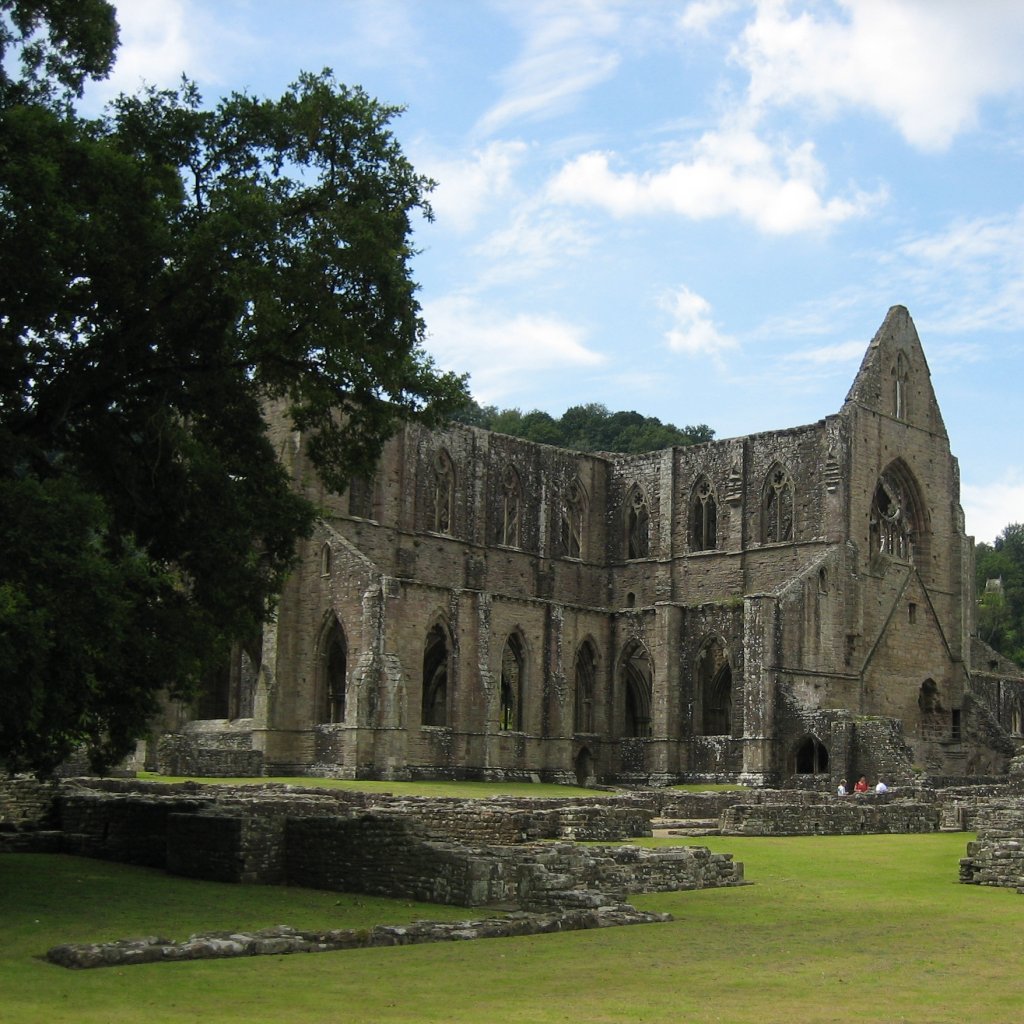
The park’s dystopian beauty engages the imagination in a way that most “designed” spaces fail to do. The ruins of the industry and technology are a profound expression of transitoriness, an intimation of mortality that is at once haunting and uplifting. Like Wordsworth at Tintern Abbey, the ruins of Sudgelande present the visitor with an ontological gap that stimulate the imagination rather than constrain it.

I love this park precisely because I believe in mystery. The way a rail track appears in a forest only to disappear into the brambles. Or how a tower emerges out of the canopy only to be eclipsed in vegetation. Mystery speaks to our souls before our intellect comprehends. Mystery has the power to radically de-center us, to pull us out of ourselves and ground us in a deeper reality.

My good friend, mentor, and visionary landscape architect, Ching-Fang Chen, first brought my attention to this park after she visited it in 2007. Fortunately for those of us in the Washington, D.C. area, Ching-Fang now works with Montgomery County (M-NCPPC) and is promoting sustainable park development based on the concept of managed succession and spontaneous vegetation.

Sudgelande offers a model for the future: a park that allows the layers of history to coexist with the spontaneous movement of nature. At the intersection of culture and wilderness, we behold mystery.


Saturday, April 17, 2010

The Most Important Urban Square You’ve Never Heard Of

Why Rotterdam’s Theater Square Represents a Turning Point for Urban Design


Art history rarely recognizes a masterpiece in its time. And neither does urban design and landscape architecture. So it’s time to pay homage to a groundbreaking urban square that changed the way designers approach urban sites.

Situated in the heart of Rotterdam, Schouwburgplein, or Theater Square was built in what was formerly a large blank space without character. Surrounded by nondescript lowrise towers that were built after the Nazi destruction, Schouwburgplein is built on top of underground parking. Designed by the landscape architecture firm West 8, the square is an interactive urban space, flexible and adaptive to the user’s needs.

In the tradition of Italy’s medieval squares, the design for Schouwburgplein emphasizes the importance of void, creating a panorama which opens to the skyline. The entire concept of the design revolves around the idea of adaptability. Lead designer Adriaan Geuze prefers the “emptiness” to overprogrammed urban spaces and argues that urban dwellers are capable of creating their own meaning in environments.

While traditional European squares are a representation of civic and religious power, Schouwburgplein empowers the public to determine their uses. Though the square is mostly flat and open, the secret to its effectiveness is the design of the urban surface. To emphasize the square as a stage, the entire surface is raised above the surrounding streets. In addition, the square’s mosaic of surface materials encourage different uses. The west side of the square is a poured epoxy floor containing silver leaves. The east side (with more sunlight) has a wooden bench over the entire length and warm materials including rubber and timber decking on the ground plane. The change in materials inspire different uses: children play a game on one surface, while skateboarders ride on another.

The surface of the square is embedded with connections for electricity and water, as well as facilities to build tents and fencing for temporary events. As a result, the surface is active and dynamic, a living field that allows the square to change day by day, hour by hour. This idea of urban surface as a living agricultural field is a departure from the philosophies of both classical and modern design. The urban surface is no longer a realm of fixed objects, but a living connective tissue capable of supporting indeterminate uses.

Like all good stage design, lighting is everything. The crane lighting designed for this project may be the most iconic element of the design. Coin-operated handles allow users to determine the height and placement of the lights. During the day, the shadow of the four crane lights move across the square like a clock, perhaps a reference to the Campo in Siena. At night, the dramatic lighting narrows the scale of the space as it casts a playful and theatric mood across the square.

Good design has alway prompted contempt from institutions dedicated to neo-traditional. The nonprofit Project for Public Spaces has added Schouwburgplein to its Hall of Shame, claiming that “this is a perfect example of how a design statement cannot be a great square.” The site goes on to say the square is often underused during certain times of day, a clear indication of its failure. PPS unfairly blames the design of the square for problems of the fragmented and under-utilized urban context. Of course, the PPS has always been a bit critical of anything built after the Victorian era.

History remembers projects that mark a turning point. The design of Theater Square represents a shift from the square as fixed object to the square as dynamic field; from a site of representation and power to a site of democracy and openness; from overprogrammed public space to an enabling territory. The shift in thinking represented in this design is already percolating through universities and cutting edge design firms. 

If you liked this post . . .

Related Posts with Thumbnails