Showing posts with label trends. Show all posts

Tuesday, March 22, 2011

Why Fashions and Trends are Good for Gardens

Tom Stuart Smith's award winning garden at Chelsea Flower Show
Last week I wrote a post about plants for spring 2011 that were “hot” or “not.”  In the post, I took a deliberately sardonic tone imitating the fashionistas I had just seen reviewing trends for the Academy Award show.  I knew I’d get some flak for that post, but was rather surprised by some of the condemnation I got for even paying attention to trends.  The reaction raised some interesting questions for me.  Should we pay attention to garden or design trends?  Are gardens immune to fashions?  One commenter wrote on another blog:

"Real gardeners don’t pay attention to which plants are in or out. I shudder to think about those that pay attention to such nonsense and am concerned about those that disseminate such marketing misinformation."


I wonder, who are 'real gardeners'?  One of my favorite bloggers, Nancy Ondra, wrote a rather compelling photographic response to my comment that Amsonia hubrictii was “out.”  Of course, I should have known better than to pick on such a beloved and versatile plant.  I still think it peaked out a year or two ago, but I must be honest: Nancy’s gorgeous photos of Amsonia through the year crushed my argument.  I know when to admit defeat.  By the end of her post, I wanted to run to my nearest nursery and buy 50 A. hubrichtii.

I rather expected good natured responses like Nancy’s.  What is puzzling to me is how strongly some readers objected to the very idea of trends in the garden.  One commenter rather eloquently wrote, “It is sad when we find the obsession with newness and being on-trend spilling over into gardening.  We need to preserve its value as essentially a slow process—the experience of designed landscapes growing and maturing and becoming more desirable with the patina of age.”  Another comment remarked, “I have to laugh, because there’s such a funny part of human nature, that when something becomes ‘too popular’ those who consider themselves ‘in the know’ are obliged to hate it.”  Both comments make some excellent points.  But I find myself having a very different reaction to trends.

Tuesday, May 4, 2010

China Sweeps American Landscape Architecture Awards


Rising Star Yu Kongjian’s Radical Vision

Design firm Turenscape in concert with Peking University Graduate School of Landscape Architecture virtually swept this year’s ASLA awards, winning an unprecedented three of the twelve design awards, including the prestigious Award of Excellence and two Honor Awards. The group beat out the hugely popular Highline, New York’s elevated rail park, anticipated by many to win this year’s top award.

All three of the winning projects were large scale, regenerative landscapes that transformed formerly degraded sites into lush, public parks. “This is very powerful,” wrote the Awards jury for the Shanghai Houtain Park, built on a former brownfield. “It’s full of the right messages of our profession. The scope is exquisite. The presentation is excellence. Shanghai never has a blue sky, and recognizing this kind of sustainable project in that context is important.”

Lead designer and professor of landscape architecture Yu Kongjian has long worked to bring attention to China’s impending environmental crisis. Yu views landscape architecture as “the art of survival, not an art of entertaining and gardening.” Awarded ASLA awards eight times since 2002, Yu is a rising star in the world of landscape architecture. In 2007, Yu won an Honor Award for The Red Ribbon in Tanghe River Park, a project that Conde Nast Traveler named as one of the seven modern architectural wonders in the world.

A Different Kind of Park

Yu has long advocated for a different kind of public park: “Why can’t we use agricultural plants, crops, wild grasses, and fruit trees to decorate cities and parks? They are equally beautiful but yield fruits and demand little attention."  Yu's love for wildness is balanced by an appreciation for the agricultural and industrial heritage of a site.  The winning projects frequently use the concept of agricultural terraces and rice fields to create ecologically productive landscapes.


Shanghai’s Houtan Park uses wild grasses and crops as a water-filtering machine, cleaning 2,400 cubic meters of water a day. “There is a beauty in wild grasses,” says Yu. “We don’t see it because we have a twisted aesthetic, taking natural things to be lower class. We are addicted to city beautification: uprooting agricultural crops and trees on the land, building cities, and importing expensive and fruitless garden plants.”

Yu goes on to make an analogy: “It’s kind of ludicrous and harmful feudalistic aristocratic aesthetic. Like when we bound women’s feet and still viewed it as beautiful and elegant. We now are binding the feet of nature.”

To view more about the winning projects click the links below:

Shanghai Houtan Park: Landscape as a Living System

The Qinhuangdao Beach Restoration: An Ecological Surgery

Tianjin Qiaoyuan Park: The Adaptation Palettes

Sunday, April 18, 2010

The Urban Wilderness: The Poetics of Industrial Ruins and Untamed Nature

The Schoneberger Sudgelande Nature Park in Germany

Parks in America are the latest casualty to interest-group politics. The park designer must not only satisfy its municipal client, but must carefully redistrict the space to meet the demands of citizen advocates: the dog park people, the kiddie playground mommies, the bikers, the rollerbladers, the garden clubs, and the birders. Like a diplomat in the Balkans, the designer’s role is to gerrymander a site, parceling off piece by piece to the urban consumers. Parks today have more in common with theme parks—a ride for every user—than their pastoral predecessors.

The Schoneberger Sudgelande Nature Park is the perfect antidote to interest-group parks. Located just south of Berlin, Sudgelande is the site of a former railway switchyard. Abandoned after World War II, the site sat fallow for the past fifty years. During that time, a richly-diverse grassland and forest crept over the site, covering the industrial site in a green patina.

Thanks to the foresight of a local citizens group with the financial backing of an environmental alliance, this wild space was preserved and turned into a park. The former repair shop for locomotives was turned into a hall for artists and performers. The tangle of rail tracks move through forest and meadow, hinting at a structure that is dissolved by the wildness.

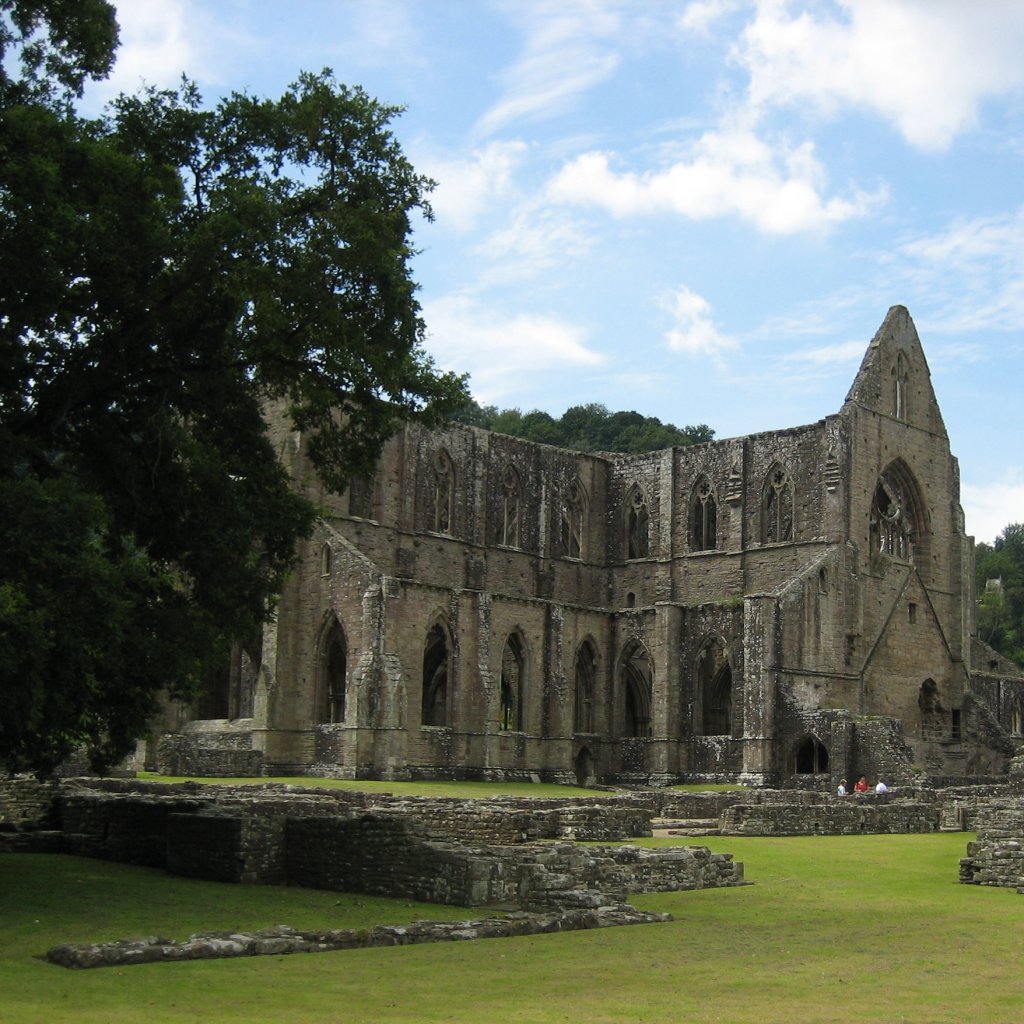
The park’s dystopian beauty engages the imagination in a way that most “designed” spaces fail to do. The ruins of the industry and technology are a profound expression of transitoriness, an intimation of mortality that is at once haunting and uplifting. Like Wordsworth at Tintern Abbey, the ruins of Sudgelande present the visitor with an ontological gap that stimulate the imagination rather than constrain it.

I love this park precisely because I believe in mystery. The way a rail track appears in a forest only to disappear into the brambles. Or how a tower emerges out of the canopy only to be eclipsed in vegetation. Mystery speaks to our souls before our intellect comprehends. Mystery has the power to radically de-center us, to pull us out of ourselves and ground us in a deeper reality.

My good friend, mentor, and visionary landscape architect, Ching-Fang Chen, first brought my attention to this park after she visited it in 2007. Fortunately for those of us in the Washington, D.C. area, Ching-Fang now works with Montgomery County (M-NCPPC) and is promoting sustainable park development based on the concept of managed succession and spontaneous vegetation.

Sudgelande offers a model for the future: a park that allows the layers of history to coexist with the spontaneous movement of nature. At the intersection of culture and wilderness, we behold mystery.


Thursday, April 15, 2010

Governor's Island Park will be Developed by New York City.

"Mayor Michael R. Bloomberg, Governor David A. Paterson, Assembly Speaker Sheldon Silver and State Senator Daniel L. Squadron today announced an agreement on the long-term development, funding and governance of Governors Island in which New York City will have primary responsibility to develop and operate the island.

As a part of the announcement the City and the State together released the Governors Island Park and Public Space Master Plan, a comprehensive design for 87 acres of open green space, rejuvenating existing landscapes in the National Historic District, transforming the southern half of the island and creating a 2.2 mile Great Promenade along the waterfront."


See the design by landscape architecture firm, West 8 in this great interactive website:

http://www.govislandpark.com/

All images by (Rendering by West 8 / Rogers Marvel Architects / Diller Scofidio + Renfro / Mathews Nielsen / Urban Design +)

Wednesday, April 14, 2010

Seeds of Change: How to get Tasty Veggies, Preserve Biodiversity, and Sock it to the Man

For the last two years, seed sales have hit record highs due in large part to the recession, the long winter, and a general increase in home gardening. The internet has made access to seeds cheap, easy, and fast. But how do you know which seed companies to buy from? And what are the environmental implications of your seed selection?

Want to know how to sock it to the agricultural conglomerates? Or how to save seeds from the fate of biotech companies and patent lawyers? Here’s a quick guide that explains what you should look for when buying seeds.

1. Support Small, Established Family-Owned Seed Distributors
Last year rumors spread across the internet that mega-seed company Burpee was bought by Monsanto, a massive agricultural conglomerate know for their genetically modified seeds. This rumor was not exactly true, as Monsanto actually acquired Seminis, a company that sells seeds to Burpee. Seminis sells not only to Burpee, but also to other large seed companies like Jung Seed, Johnny’s Selected Seeds, and Park seed. The big boys are indeed getting bigger.

While the ownership hierarchy and propagation ethics of large seed companies are murky, there are plenty of small, family-owned seed companies that offer a diverse selection. Select companies such as family-owned Baker Creek Heirloom Seeds. This husband and wife team are taking on corporate agriculture with their grassroots “Pure Food” movement. Their charming populism is even more seductive when combined with pictures of their adorable daughter holding baskets of heirloom fruit. Just try and resist their free catalogue—it’s pure garden porn. In addition to Baker Creek, I’ve listed a few other notable seed companies at the bottom of this blog that are worth looking into.

2. Buy Open-Pollinated Seeds
Open pollination is the oldest method of developing seeds, predating agriculture itself. Open pollination means seeds either pollinate themselves (self-pollinating) or are pollinated by insects or bees. Why does this matter? Open pollinated seeds are dynamic, that is they change and adapt to local sites. The plant’s genetic material is often crossed with the genetic material of another plant of the same species, resulting in hardier strains adapted to the local microclimate. The great diversity of heirloom apples that once populated colonial America was a result of new strains of apples that were open pollinated. Supporting open pollination means you are creating more genetic diversity in our food and plant supply.

Most seeds on the market are hybrid seeds. These are the offspring of two distant and distinct parental lines. ‘Better Boy’ and ‘Early Girl’ tomatoes, for example, are hybrids of a couple different lines of the same species. The problem with hybrids is that breeders limit the genetic diversity to guarantee a certain trait—say size or a color. Even more insidious than hybrids are GMOs or genetically modified organisms. Much of mass food production—like the Idaho potato—are now propagated with GMO. This means a plant of one species has its genetic material spliced with plants of another species. These are crosses that would have never happened in nature. Eighty percent of all corn, ninety percent of all soybean, and almost ninety percent of all cotton comes from genetically modified plants. While the jury is out on whether GMO are actually harmful to us or the environment, one thing is for sure: the world food supply is genetically narrower than at any point in history. Using open pollinated seeds preserves genetic diversity.

3. Collect Your Own Seed; Trade with Others
Nothing makes you feel more grounded with the cycles of nature than harvesting, drying, and storing your own seeds. Want to connect on a spiritual level with the botanical universe? Or achieve gardening self-actualization? Collect seeds. Seed collection requires you to watch the reproductive cycle of plants, to notice pollination, and understand how and when flowers turn to seedheads. Plants will no longer be your blooming indentured servants, but free ecological beings capable of self-seeding and adapting.

Last year, I noticed a Heuchera cultivar of mine had self-seeded in the garden. It was remarkable to notice the slight variations this new plant had from its parent, a result of the miracle of open pollination. My very own cultivar. Collecting seeds can be easy or difficult depending on the species. Start with annuals, then progress to perennials and shrubs.

Once you’ve achieved a small level of proficiency with seed collecting, you’re ready to embark on the next frontier: the black market seed trade. Ok, so maybe it’s not a “black” market, but there’s something downright exhilarating about arranging a backroom trade on the internet, then getting a shipment in a blank envelope. GardenWeb offers an a great starting place for seed exchanges. Become a bartering expert. Where your obsession takes you from there is up to you.

Check out these Family Owned Seed Companies:

www.sustainableseedco.com/pages/  A California company that sells untreated, open pollinated, heirloom seeds.
www.mariseeds.com/ A Tennessee company selling over 500 varieties of tomatoes and peppers.  The Italian love oozes from this site. 
http://www.rareseeds.com/ The Baker Creek Seed Company mentioned above.
www.dianeseeds.com/ Diane's sells high quality seeds.  Her selections are minimal but good.
www.seedsavers.org/Content.aspx?src=buyonline.htm A seed exchange and vault dedicated to preserving biodiversity.
http://nativeseeds.org/catalog/index.php?cPath=1 Specializing in seeds of the southwest desert and native cultures.
www.selectseeds.com/cgi-bin/htmlos.cgi/2010/catalog.htm  Specializing in open pollinated annual flowers and other antique varietals.
www.victoryseeds.com/  Rare, Open-pollinated & Heirloom Garden Seeds

Monday, April 12, 2010

How a Frenchman became America's Hottest Landscape Architect: A Focus on Michel Desvigne

Michel Desvigne is having his American moment. One of the most celebrated French landscape architects has recently completed a spate of high profile American commissions.

Desvigne’s recent U.S. work includes the Walker Art Center in Minneapolis (with architects Herzog & de Meuron), the Dallas Center for the Performing Arts (with architects Norman Foster and REX/OMA), and the St. Louis Art Museum (with architect David Chipperfield).

Desvigne owes much of his recent success to his association with European starchitects such as Norman Foster, Rem Koolhaas, Renzo Piano, Herzog and de Meuron, and Jean Nouvel. Cities across the globe are turning to these celebrity architects to revive neglected urban areas by creating sensational cultural buildings. When cities want an architectural adrenaline shot—what Gehry did for Bilbao, Spain—then Desvigne is often the corresponding landscape architect.

The irony is that Desvigne’s designs are anything but iconic. “Having reached what one architecture critic described as the midpoint in my career, I feel I have nothing to show,” describes Desvigne in the introduction to his book Intermediate Natures: The Landscapes of Michel Desvigne. He continues, “Or at least nothing that resembles the seductive images in architecture books.”

Perhaps it is precisely because Desvigne’s work resists formal composition and design stylization that makes him so compatible with celebrity architects. His landscapes are a field to their objects, a living fabric that knits together the architectural pieces. In Dallas, Desvigne’s ten acre Sammons Park offers a green foil to the complex of opera houses, theaters, and ampitheaters that sprawl over the loosely defined district. The park is rather minimal in its design and detail. Blocks of lawn combine with strips of concrete, and the young trees and “micro-gardens” give the landscape an in-the-works feeling.

“He has a fascination with the unfinished,” says American landscape architect James Corner. “He does not seem at all bothered that a landscape architectural project may appear raw, young, still-in-development.” Corner and Desvigne are transatlantic intellectual allies. Both landscape architects share similar conceptual approaches that eschew form-making and embrace agriculture as a metaphor for urban intervention.

Perhaps Desvigne’s interest in agricultural landscapes is the key to understanding his work. Agricultural sites differ from scenic landscapes in the fact that they are working and ever-changing landscapes. In the agricultural setting, people work the land and dwell in it, a pragmatic model Desvigne considers appropriate for urban sites. The landscape is not a static object to be looked upon, but a field in which we dwell. “I like poplar groves, orchards, artificially planted forests,” describes Desvigne, “I like to perceive these spaces whose conventional order is forgotten so that they are only densities, variations on density. Neither full nor empty, these squared spaces are sieves of a sort, where paradoxically life moves in—traps for an intermediate nature.” (Image below Keio University, Tokyo).
The influence of agriculture—or more broadly geography—is seen more literally in his design for the Millennium Park in London. The site was a former gasworks that required radical decontamination efforts that leveled the site and created a tabula rasa. Desvigne rejected the idea of creating a large urban park with predictable lawns, playgrounds, and natural areas. Instead, he advocated for the creation of an “intermediate landscape” to give texture and density to the formless site. Inspired by images of aerial photos of alluvial forests, Desvigne called for more than twelve thousand native hornbeam trees and over one hundred thousand shrubs to be densely planted in a grid with clearings indicated for future park activities. The design created a flexible framework for future development that considered the park’s evolution through time.


This process based approach is a hallmark of Desvigne’s work. It gives his work a quality of anticipation and possibility. “I think it is important to hold out against clichés, to play with the multitude, with the successions,” writes Desvigne, “There is no ‘beautiful’ image, nor should there be, except by accident.”

Wednesday, April 7, 2010

The Wild Garden

What in your garden is truly wild?

At its heart, the sustainable gardening movement is about creating gardens that look and act more like nature.  Or at least an interpreted form of it.  But how many of our gardens actually let wildness in?  Do we allow plants to self-seed and roam freely?  Are happy accidents permitted, or do we quickly correct them and steer the garden back on course?

The concept of wildness in gardens is not new.  But the topic is hotter than ever these days.  Author, lecturer, photographer, and designer Rick Darke has recently revived William Robinson's classic tome The Wild Garden.  William Robinson (1838-1935) introduced a revolutionary book in 1870 that advocated an authentically natural approach to planting design.  Now Rick Darke has republished this timeless work, complete with Darke's own photographs and preface.

No one in America has Rick Darke’s eye for plants in their natural habitat. Darke is one of the few planting photographers today to get beyond the horticultural close up and show plants living and growing in their natural habitats. The result is dramatic. Darke’s books are literally changing planting design in America, as his photographs serve as powerful inspiration to landscape architects and gardeners. Now those photographs come together with Robinson’s timeless text.

The Idea of Wildness

The concept of wilderness has inspired literature throughout the centuries. But Robinson dispenses with this mythic “wilderness” and offers a concept of wildness that is entirely relevant for creating a modern, ecological landscape ethic. The wild garden, “has nothing to do with the old idea of ‘Wilderness,’” writes Robinson in his preface. Robinson’s wild garden is not a pristine sanctuary untouched by human hands, but a place where human activity and natural ecology intersect. “Some have thought of it as a garden run wild,” Robinson says.

A New Aesthetic

That Robinson’s wild garden does not preclude human intervention, but welcomes it, makes it the starting point for any gardener serious about sustainable design. Chapter by chapter, Robinson richly describes strategies for arranging plants to work within naturally occurring plant communities. Robinson is a plantsman’s plantsman. Each chapter focuses on solid techniques for combining plants into various natural habitats, creating a hybrid space that is at once wild and man-made.

His combinations are poetic: double crimson peonies dotted through a field of native grasses; clumps of yellow alliums growing along a forgotten fenceline; or drifts of Lily of the Valley gathered in a sunny copse in the woods. His work describes a new aesthetic: a third nature where cherished cultivated plants intermingle freely with effervescent native vegetation.

In addition to the text, the book has almost a hundred exquisite drawings and engravings by British artist Alfred Parsons. The drawings bring to life Robinson’s vision, adding a moody richness that conceals as much as it reveals.

The Wild Garden is essential reading for any plant designer, landscape architect, or gardener. This textbook provides layers of inspiration and depth not offered by today’s coffee table books on planting. Since reading this book, my planting designs have been liberated, and I owe a debt to Robinson and Darke for expanding my imagination.

Wednesday, March 31, 2010

Spontaneous Gardens: The Next Frontier in Green Design?

Is the ultimate strategy in green garden planting not to plant at all? The concept of spontaneous gardens--gardens that emerge without human intervention--is a relatively new concept in America, but one that has potential to change the way we garden.

Most gardeners spend quite a bit of energy combating "spontaneous vegetation." Unless it happens in a forest or a meadow, spontaneously occuring vegetation in human landscapes is not welcome. I spent an hour last weekend mercilessly attacking Henbit (Lamium amplexicaule) and Yellow Woodsorrel (Oxalis stricta) in one of my gardens. But earlier this morning, I was blown away by the most beautiful drifts of purple-blooming Henbit and Ground Ivy along the George Washington Parkway. In the urban setting it was a pest; in a more pastoral setting, it was a wildflower.

When you strip away the cultural baggage and consider these plants purely from their ecological function, a new picture emerges. Spontaneously occuring vegetation reduces urban temperatures, provides food and habitat for wildlife, prevents erosion, builds soil, and often performs phytoremediation. In addition, the act of creating and maintaining a spontaneous garden is a completely sustainable process. It requires almost no soil preparation, allows the plant to pick the site, needs no fertilizers or other inputs, and is ridiculously low maintenance.

While the concept of spontaneous gardening resides at the fringes of the American gardening scene, Europeans have worked at the concept for decades. The book The Dynamic Landscape, edited by Nigel Dunnett and James Hitchmough, is a collection of essays that teach strategies for manipulating spontaneous vegetation to create more pleasing human landscapes. A central theme of the book is allowing spontaneous to flourish, but selectively adding or subtracting species to create desired effects. Very similar to the maintenance strategies of meadows (River Farm meadow pictured below). The planting strategies are based on strong ecological research into meadow and grassland maintenance.


When it comes to planting design and gardening, I am a control freak. The idea of waiting for weeds to take over my prized lot, and then only doing minor tweaks to it makes me insane. But two recent revelations have started to change my mind. First, I used to pass an abandoned yard in Capitol Hill on my way to work every morning. It was a lawn that had gone fallow. Left alone, it was by far the most interesting and beautiful yard I passed. The drifts of clover and buckhorn plantain floated gracefully among the inflorescences of grasses. Pollinators swarmed. I spent more time staring at that dumb lot than any of the other skillfully maintained gardens.

Second, as a planting designer, I spend several hours a day meticulously designing planting plans to look natural. It's hard. In fact, it's damn hard to pull that off without looking contrived or ridiculous. It takes thoughtfully developing strong gestures, then carefully creating layers of interest, balancing grasses with forbs and woodies, creating texture and contrast, then thinking through the seasons of bloom. And to be completely honest, the end result fails as often as it succeeds.

One of the more inspiring landscapes I've seen recently is Piet Oudolf's design for the Highline. He uses a highly designed planting to mimic the quality of the spontaneous vegetation that dominated the abandoned rail track. It is remarkable precisely because it is so reminiscent of the abandoned rail tracks.

It's the realization that all of my efforts at planting design--even the most inspiring planting I've seen--are all aimed at having that certain quality, the je ne sais quoi, of naturalness. Not an imitation of nature, mind you, but an effervescent interpretation of it. The great irony is that creating easy, loose-looking landscapes requires working a design to death.
So maybe there's something to this spontaneous garden thing. Maybe my great crusade to get American gardens to loosen up should start with me. Let those weeds go. Create a "Freedom Lawn." Or a spontaneous green roof. Or throw some seed bombs and see what happens. The lessons from the mean and gritty world of urban ecology might just teach us how to flourish in the future.

If you liked this post . . .

Related Posts with Thumbnails