Showing posts with label culture. Show all posts

Thursday, May 27, 2010

The Perfect Antidote to Trademarked Plants

“The chief vice in gardens is to be merely pretty,” wrote American landscape architect Fletcher Steele in the 1930’s. “I believe there is no beauty without ugliness and that it should not be otherwise. Both are capable of stinging us to live.”

This quote has been swirling through my head lately, especially when I encounter advertisements for the latest hyper-hybrid, monster-blooming shrub or perennial. The Proven Winners plants, for example, have become the Barry Bonds of nursery plants. Or what’s worse, now we have celebrity gardeners like P. Allen Smith’s who have trademarked their own laboratory-bred Platinum Collection plants. The American horticultural industry seems bent on producing engineered plants that bloom eternally. Mophead hydrangeas no longer mark the beginning of summer, thanks to the Endless Summer Hydrangeas (trademark). Encore Azaleas promise blooms spring, summer, and fall. What does a fall blooming azalea mean, anyways?

Of course, there’s nothing wrong with loving big flowers. Just this week, I passed a neighbor’s peony border with softball-sized magenta blooms. It was glorious. But a garden with nothing but genetically-engineered super-bloomers is a like inviting only models to a dinner party. When prettiness trumps character, we all lose.

Which is perhaps why this year I have been seduced by an ancient family of plants. During some deep winter garden reading, I started to make connections between several bizarre, yet fascinating plants. Turns out, they all belong to the remarkable nightshade (Solanaceae) family. Plants of the nightshade family are the perfect antidote to overly-bred bloomers. First, most of these plants are anything but pretty. This year, I’m growing the rather grotesque Naranjilla plant (Solanum quitoense). It is a nasty looking plant: its massive leaves are covered with deep purple spikes. This ancient Incan plant produces little orange fruits that I understand taste like a cross between rhubarb and lime.

Solanum quitoense in a mixed border [image from Landcraft Environments LTD]

What’s more, the ethnobotanically complex nightshade family includes two of the world’s most popular vegetables: potatoes and tomatoes. Those two plants alone shape the history and cuisines of many of the world’s cultures. Nightshades also include egglplants, peppers, tobacco, and many berries. However, the tomato wasn’t always universally beloved. It was the tomato’s resemblance to the deadly nightshade plant (Solanum nigra) that slowed its acceptance in Europe.

Perhaps the dark and dangerous history of these plants is what makes this family so seductive. While some of the plants create the most nourishing comfort foods on the planet, others are downright deadly. Snakeberry (Solanum dulcamera) has egg shaped red berries just like a cherry tomato that contain high levels of the phytochemical solanine. Solanine is known to cause birth defects, hallucinations, convulsions, fits of laughter, coma, and even death. Even potatoes and tomatoes contain small levels of solanine. Other nightshades contain tropane alkaloids. The term tropane is named after the Greek Fate, Atropos, who cut the thread of life. Tropane alkaloids are found in nightshade ornamentals like Datura and Brugmansia.

Like living dangerously? Several respectable seed sources sell Garden Huckleberry (Solanum nigrum var. melanocerasum), a variant of the deadly nightshade. Several regions of our country make jams and pies from the berries of this plant.  Be careful though:  others claim this plant causes defects of the central nervous system. Want to play it safe, but still explore the wonderfully bizarre world of nightshades? Try the Pepino Melon (Solanum muricatum), a compact South American shrub that produces fruit the size of a large goose egg. Beautifully pendulous cream colored fruit has purple stripes. The fruit has sweet, mild flesh that is somewhat melon-like.

Pepino, Solanum muricatum [Image from B&T World Seeds]

Nightshades are a reminder that there once was a time when plants could strike fear in the human heart. This year, I passed on the goopy Endless Summer Hydrangea and instead planted a nasty looking Naranjilla. It’s massive leaves studded with purple spikes greet me each morning, a reminder that out of fear and understanding, comes respect.

Want seeds of some of the plants mentioned? 
Baker Creek Heirloom
Top Tropicals

Monday, May 24, 2010

Oxford Study Finds that Ivy Can Protect Walls

[Image from Mayang.com]
This article has been linked from The University of Oxford.  For original link, click here.

"The received wisdom that ivy destroys buildings has been overturned by a new study by Oxford University.

In a three-year project, Oxford researchers analysed the effects of ivy growing on buildings in five different parts of England and discovered that the plant plays a protective role. They found that an ivy canopy was like a thermal shield, combating the extremes of temperature which often cause walls to crack.

English Heritage commissioned Professor Heather Viles of Oxford University's School of Geography and the Environment to analyse the effect of common ivy (Hedera helix) to guide them in their important role as the steward of hundreds of historical sites. Professor Viles’s research team monitored the effect of ivy on walls situated in different parts of the country with varying climates and challenges.They found that ivy acted as a thermal blanket, warming up walls by an average of 15 per cent in cold weather and cooling the surface temperature of the wall in hot weather by an average of 36 per cent. The ivy was also found to absorb some of the harmful pollutants in the atmosphere. Walls where ivy was growing were less prone to the damaging effects of freezing temperatures, temperature fluctuations, pollution and salts than exposed walls without ivy.

Professor Viles said: ‘Ivy has been accused of destroying everything in its path and threatening some of our best loved heritage sites. Yet these findings suggest that there are many benefits to having ivy growing on the wall. It not only provides colourful foliage but also provides walls with weather-proofing and protection from the effects of pollution.’

Garden walls at some of Oxford University’s old colleges (Trinity, Pembroke and Worcester Colleges) as well as the Old City Wall were test sites in Oxfordshire. Elsewhere, the research team examined whether ivy at the Dover Drop Redoubt site, one of a series of forts at Dover Western Heights, was friend or foe. Other walls were tested at Byland, North Yorkshire; Nailsea near Bristol; and Leicester in the Midlands.

The Oxford team used resistivity methods to monitor wall moisture levels and fixed monitors to measure the temperature and relative humidity of the microclimate beneath the ivy canopy as compared with uncovered walls. They also conducted laboratory analyses to examine the role of ivy in more detail.

The findings suggest that ivy has protective qualities for buildings that are intact; but they also showed that where walls are already damaged ivy rapidly finds its way into existing cracks and holes in walls. The researchers have built a test wall, planting ivy at the base, at Wytham Woods in Oxfordshire. The cube-shaped wall contains different flaws so researchers can measure and compare the different deterioration rates with and without ivy.

The project provides those working for English Heritage as well as gardeners up and down the land with a better idea of how to treat ivy. Many might otherwise be unclear about whether to cut down ivy climbing up the walls of their garden and home.

Alan Cathersides, Senior Landscape Manager at English Heritage, said: ‘English Heritage are always keen to avoid unnecessary work to monuments and hope this research will lead to a more balanced approach to ivy. Removal should not be automatic as so often in the past, but a carefully considered element of long term management.’

Out of this study, English Heritage hope to issue guidelines for staff and provide guidance for the public on their website by early next year. Meanwhile, Professor Viles and Dr Troy Sternberg of Oxford's School of Geography and the Environment, and Alan Cathersides, from English Heritage, will be speaking about the project and providing practical guidance at a one-day conference on ivy at the Geological Society of London on Wednesday 19 May. "

Thursday, May 13, 2010

The Art of Landscape Ecology: The Paintings of Philip Juras

Shining Rocks Wilderness, Pigsah National Forest
Landscape painting once had a rich dialogue with landscape design. The English landscape garden, for example, was greatly influenced by paintings. This rich connection hardly exists today. But painter Philip Juras might have something to say about that.

Formally trained as both a painter and a landscape architect, Juras is the perfect link between landscape painting and design. His large scale paintings capture the beauty of specific ecological communities. Juras paints primarily remnant native landscapes. Like the Manahatta project in New York, Juras’ work focuses on depicting specific ecological communities as they may have looked before European settlement.

His canvases are large and luminous, capturing the feeling of space as light moves across it. He deftly balances abstraction and ecological specificity. The compositions are serene yet teeming with life. Juras most recent series are paintings used to illustrate a book on naturalist William Bartram’s travels through the American South.

I first met Philip when I was in graduate school at the University of Georgia. My professor and native plant expert Darrel Morrison developed a class that took students to remnant virgin landscapes around the Southeast. Juras joined us on some of those trips. The landscapes we witnessed changed the way I thought about design. The complexity and majesty of these spaces were unlike any other human disturbed forest or meadow I had experienced. The patterns created by the mature plant communities were strong, legible, and distinct, a offering a storehouse of ideas for modern design. Juras’ paintings recall these landscapes.

To see more about Philip's work, visit his website: http://www.philipjuras.com/index.htm


Wednesday, May 5, 2010

Olmsted in the Jungle

Was the Father of American Landscape Architecture also the Father of Temperate Tropicality?


One of the many trends in garden design these days is the resurgence of the tropical garden, particularly for northern gardeners in temperate zones. Several books have been written on how to create a tropical looking landscape by using large-leafed hardy plants. So I was particularly psyched to come across these quotes from Frederick Law Olmsted, Sr, the creator of Central Park in NY and the father of American landscape architecture.

Rhodeside Harwell principal and Olmsted scholar, Faye Harwell, dug up these quotes for me as a part of an Olmsted restoration project we are currently working on.

During a voyage through Central America in 1863, Olmsted writes about his absolute delight in the tropical landscape he encountered. These are delicious quotes:

“I have never had a more complete satisfaction and delight of my love of nature than I had yesterday in crossing the isthmus. You will remember that I always had a reaching out for tropical effect, but I found the reality far beyond my imagination. … the scenery excited a wholly different emotion from that produced by any of our temperate-zone scenery…excited it instantly, instinctively and directly. …It rests upon a sense of the superabundant creative power, infinite resource, and liberality of Nature –the childish playfulness and profuse careless utterance of nature… .after my excitement was somewhat tempered, I naturally fell to questioning how it was produced, and whether, with materials that we can command in the temperate regions we could to any marked degree reproduce it…

By selection and special treatment, we can then produce trees, which, seen at a distance of a couple of hundred feet, shall lead a man to say, “I have seen such trees before only in the tropics”. …The length of stem and smallness of head is more than I had supposed, often more marked than I had supposed, I mean at a distance, the trunk frequently is imperceptible, and you see the head apparently floating unsupported. The trees growing in this way are not palms…but in their foliage so nearly like the Ailanthus that at no great distance (as a landscape painter would depict them) you would not know them apart, at least an average observer would not.”

There are all sorts of other vines….Very often it seemed as if hundreds of cords (1/2 inch) were stretched from every part of the great spreading tops of trees, fifty to a hundred feet to the ground. All large trees have strained themselves to the utmost to get their foliage away from the smothering density of the ground-growth….For tropical or tropic-like scenery you must get the utmost possible intricacy and variety…”

Later in the same journey/same letter Flo writes:

‘Off Cape Corrientes, October 6th…

What I chiefly feel…is the particular beauty in tropical landscape which is due to the frequent cavernous depths of shade…the umbrella-like trees, overhanging dense undergrowth and the vines making a drapery, all natural ravines and cliffs of rock and caverns of rock, which form the characteristic topography of this coast…’

Panama, September 26,1863; Letter to Ignaz Anton Pilat (head gardener at Central Park from 1857)
The Papers of Frederick Law Olmsted, V 5, pages 85-92.

Tuesday, April 27, 2010

Botanicals for the Green Revolution: The Prints of Angie Lewin


Angie Lewin is the artist for the green revolution.  Not since William Morris has an artist combined patterned abstraction with horticultural specificity.  Her hand-made prints show seed pods and grasses, clouds and moonlight, islands and cliffs.  Her linocuts and wood engravings are both specific and universal, a quality that has made her one of the most demanded printmakers in England.

Angie was not always strongly connected to the natural world.  For years Angie lived in north London as an illustrator.  When she and her husband decided to buy a holiday cottage on the coast road in Norfolk, everything changed.  The clifftops and saltmarshes of the North Norfolk coast inspired Angie to return to print making, a discipline she had studied in graduate school.  Angie had previously studied garden design in her thirties, but found it took the joy out of gardening.  But it did open her eyes to plants.  "I became fascinated by the structure of plants," says Angie, "especially those that were about to flower or had flowered already."

Her style is recognizable: the colors are a retro palette, and the arrangement is a mix of arts and crafts and mid-century modern.  But her eye for horticultural detail elevates her designs.  In her prints, you can feel the connection between plant and place, and its this element that makes her work strikingly original.  You get a sense from her work that if you see the plant well enough, you will know the larger landscape.  Though nature is abstracted, the ecology is still present. "I like looking at the landscape through the plants," Angie says.   

Goatsbeard, dandelions, cow parsley, fennel, and sea lavender--Angie is able to turn gardener's weeds into expansive landscapes.   The process is laborious and time-consuming.  For each print, Angie begins by sketching.  The sketches become detailed sketches, which then get cut into the wood.  Each color necessitates a separate block, each of which takes up to a week to cut.  If she makes a mistake while cutting, she has to start from the beginning.  The final piece is printed on delicate Japanese paper, one block at a time.  Since everything is done by hand, Angie only runs small prints.  "I have so many sketches that I'm always keen to move on to the next print."

The end results have attracted attention.   Angie's prints have donned the cover of garden writer Noel Kingsbury new book, Natural Garden Style.  Kingsubry has long trumpeted the value of the structure of plant, not just its bloom or color, so her art was a good philosphic fit.  In addition, Angie has completed covers for Leslie Geddes-Brown's Garden Wisdom and Jeremy Page's Salt.  Author Leslie Geddes Brown explains, "The whole book was, in its turn, inspired by the art of Angie Levin, who brings her own vision of the natural world to her work." 

To learn more about Angie Lewin's work, you can visit her website.

Sunday, April 25, 2010

Your Herbs are Trying to Kill You


The Dangerous and Seductive World of Phytochemicals

Among my many plant obsessions, growing and cooking with herbs and spices is one my favorite horticultural pastimes. Herbs are, after all, a bridge between two things I love: the garden and the kitchen. During this past winter, while confined to reading about gardening, my plant studies turned to ethnobotany, the study of the complex relationship of people and plants. What I read changed the way I look at those seemingly benign green lumps outside my kitchen.

First, I was struck by the awe and reverence that our ancestors had for these plants. From the earliest times, herbs and spices have been among the most highly prized and costly of ingredients. Entire empires rose and fell trying to control the trade of herbs and spices. Even before that, the religions of the ancient world viewed these plants as a means of spiritual fulfillment reached through sensuous experience (see Song of Solomon 4:12-15). Which prompts the question: was this infatuation and reverance just ancient superstition, or are these plants somehow powerful in mysterious ways?  In the last ten years, new studies of plant's phytochemicals offer some answers.

“Plants are virtuosos of biochemical invention,” writes food science writer Harold McGee. The chemicals in plants are potent stuff. That boring potted oregano on your patio is actually an arsenal of phytochemicals. To chew on a raw leaf of oregano is not pleasant, and that’s mostly due to the toxicity of the chemicals in the plant. In fact, the purified essence of oregano and thyme can be bought from chemical supply companies with warning labels on  them.  Surprisingly, that’s exactly the plant’s goal. While animals can use their mobility to avoid predators, stationary plants resort to chemical warfare. Each plant produces thousands of strong, sometimes poisonous chemicals to ward off animals, humans, bacteria, and insects.

Herbs and spices stockpile aroma chemicals in oil-storage cells connected to glands on the surface of the leaves. Though we think of herbs or spices having a single flavor, they often contain a mixture of several aromatic compounds combined. So when you smell coriander seed, for example, you smell both flowery and lemony; bay leaves mix eucalyptus, pine, and flowery aromas. The individual flavor chemicals are a fascinating study unto themselves: cineole is found in sage, basil, and nutmeg and gives these plants their characteristic freshness; the phytochemical estragole gives tarragon its anise flavor; and safrole gives both the herb hoja santa and the root of the sassafras tree (from which root beer is derived) its distinctive “candy-shop” aroma.

The great irony is that humans have come to love these very plants that mean to do us harm. We have even learned to enjoy chemicals that are designed to hurt us. Think of the pungent sulfuric compounds of onions and the allium family, or the burn of capsicums from peppers. Ginger, mustard, horseradish, wasabi--we convert these weapons into pleasure through breeding and cooking. Cooking dilutes the effect of the essential oils. We still ingest these toxins, but at lower levels because they are mixed with other foods.

So are these phytochemicals bad for us? Probably not in small doses. In fact, most herbs and spices contain phenolic compounds that are chock full of antioxidants which prevent DNA damage, cancers, and inflammation. But certain people should be careful. Pregnant women, in particular, should be cautious about ingesting certain herbs or spices, as some are feared to induce contractions. Developing fetuses may not have developed the immunity to the toxins of certain phytochemicals. So check with your doctor.

Science seems to confirm what our ancestors knew for centuries: that herbs and spices are seductive, yet powerful alchemists. I will never look at my potted oregano the same way again.

Tuesday, April 20, 2010

Abstract Expressionism and Planting Design: A Visual Analogy

I have always been drawn to abstract expressionism, both artistically and philosophically.  Art critic Harold Rosenburg described the genre in terms of its action, "At a certain moment the canvas began to appear to one American painter after another as an arena in which to act. What was to go on the canvas was not a picture but an event."  In the same way, I am drawn to planting design which is muscular and gestural.  It speaks to the viewer at an emotional and spiritual level, and arranges plants in an ecologically sympathetic geometry.  Here, I've set Joan Mitchell's After April is set next to a Piet Oudolf composition:


And it is not just the bold use of color that makes this analogy; it is the philosophic stance of the artists that resonates with me.  Painter Barnett Newman described the drive to paint, "What is the explanation of the seemingly insane drive of man to be painter and poet if it is not an act of defiance against man's fall and an assertion that he return to the Garden of Eden? For the artists are the first men." Likewise, if the design of landscapes is not fundamentally a humanistic endeavor, then it fails.  Naturalistic design is not about imitating nature, it is an interpretation of nature that expresses the human condition.  Both the painter and the architect create space for dwelling.  Here Newman's painting declares space in the same way the birch grove does:

What was liberating about this style of painting was that in communicating a pure emotion, in expressing space, or in holding a void, the painting was liberated from the canvas.  Great planting design likewise liberates a space from the confines of the site or property line. It gives the site a feeling of expansiveness by recalling a larger moment of nature.  Or better yet, it arouses a longing for nature that is embedded in each of us.
Helen Frankenthaler once said, "A really good picture looks as if it's happened at once. It's an immediate image. For my own work, when a picture looks labored and overworked, and you can read in it. And I usually throw these out, though I think very often it takes ten of those over-labored efforts to produce one really beautiful wrist motion that is synchronized with your head and heart, and you have it, and therefore it looks as if it were born in a minute."

So in looking at the paintings I love, it becomes increasingly clear: the only planting worth doing is big, bold, and gestural.  Strive for expansive, moody, luminous design.  And remember that best naturalist design is first humanist. 

Sunday, April 18, 2010

The Urban Wilderness: The Poetics of Industrial Ruins and Untamed Nature

The Schoneberger Sudgelande Nature Park in Germany

Parks in America are the latest casualty to interest-group politics. The park designer must not only satisfy its municipal client, but must carefully redistrict the space to meet the demands of citizen advocates: the dog park people, the kiddie playground mommies, the bikers, the rollerbladers, the garden clubs, and the birders. Like a diplomat in the Balkans, the designer’s role is to gerrymander a site, parceling off piece by piece to the urban consumers. Parks today have more in common with theme parks—a ride for every user—than their pastoral predecessors.

The Schoneberger Sudgelande Nature Park is the perfect antidote to interest-group parks. Located just south of Berlin, Sudgelande is the site of a former railway switchyard. Abandoned after World War II, the site sat fallow for the past fifty years. During that time, a richly-diverse grassland and forest crept over the site, covering the industrial site in a green patina.

Thanks to the foresight of a local citizens group with the financial backing of an environmental alliance, this wild space was preserved and turned into a park. The former repair shop for locomotives was turned into a hall for artists and performers. The tangle of rail tracks move through forest and meadow, hinting at a structure that is dissolved by the wildness.

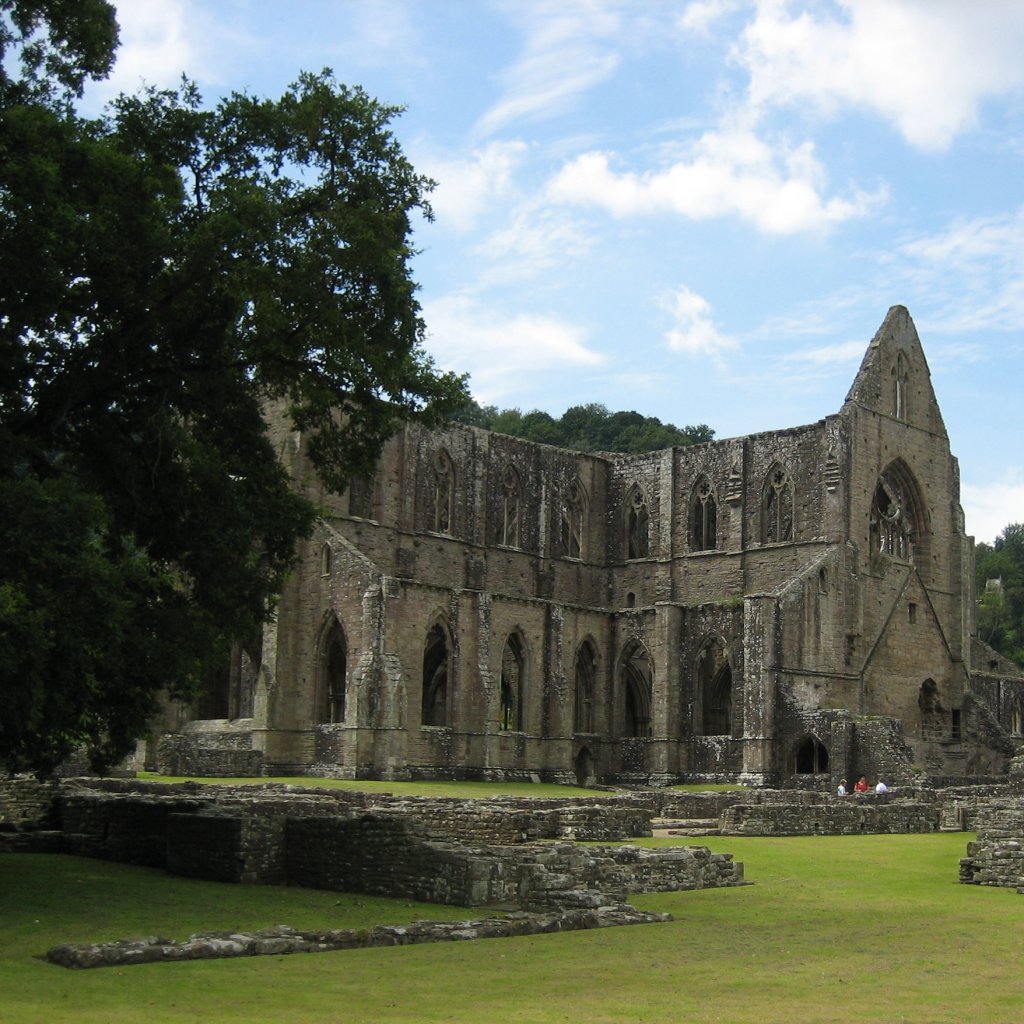
The park’s dystopian beauty engages the imagination in a way that most “designed” spaces fail to do. The ruins of the industry and technology are a profound expression of transitoriness, an intimation of mortality that is at once haunting and uplifting. Like Wordsworth at Tintern Abbey, the ruins of Sudgelande present the visitor with an ontological gap that stimulate the imagination rather than constrain it.

I love this park precisely because I believe in mystery. The way a rail track appears in a forest only to disappear into the brambles. Or how a tower emerges out of the canopy only to be eclipsed in vegetation. Mystery speaks to our souls before our intellect comprehends. Mystery has the power to radically de-center us, to pull us out of ourselves and ground us in a deeper reality.

My good friend, mentor, and visionary landscape architect, Ching-Fang Chen, first brought my attention to this park after she visited it in 2007. Fortunately for those of us in the Washington, D.C. area, Ching-Fang now works with Montgomery County (M-NCPPC) and is promoting sustainable park development based on the concept of managed succession and spontaneous vegetation.

Sudgelande offers a model for the future: a park that allows the layers of history to coexist with the spontaneous movement of nature. At the intersection of culture and wilderness, we behold mystery.


Saturday, April 17, 2010

The Most Important Urban Square You’ve Never Heard Of

Why Rotterdam’s Theater Square Represents a Turning Point for Urban Design


Art history rarely recognizes a masterpiece in its time. And neither does urban design and landscape architecture. So it’s time to pay homage to a groundbreaking urban square that changed the way designers approach urban sites.

Situated in the heart of Rotterdam, Schouwburgplein, or Theater Square was built in what was formerly a large blank space without character. Surrounded by nondescript lowrise towers that were built after the Nazi destruction, Schouwburgplein is built on top of underground parking. Designed by the landscape architecture firm West 8, the square is an interactive urban space, flexible and adaptive to the user’s needs.

In the tradition of Italy’s medieval squares, the design for Schouwburgplein emphasizes the importance of void, creating a panorama which opens to the skyline. The entire concept of the design revolves around the idea of adaptability. Lead designer Adriaan Geuze prefers the “emptiness” to overprogrammed urban spaces and argues that urban dwellers are capable of creating their own meaning in environments.

While traditional European squares are a representation of civic and religious power, Schouwburgplein empowers the public to determine their uses. Though the square is mostly flat and open, the secret to its effectiveness is the design of the urban surface. To emphasize the square as a stage, the entire surface is raised above the surrounding streets. In addition, the square’s mosaic of surface materials encourage different uses. The west side of the square is a poured epoxy floor containing silver leaves. The east side (with more sunlight) has a wooden bench over the entire length and warm materials including rubber and timber decking on the ground plane. The change in materials inspire different uses: children play a game on one surface, while skateboarders ride on another.

The surface of the square is embedded with connections for electricity and water, as well as facilities to build tents and fencing for temporary events. As a result, the surface is active and dynamic, a living field that allows the square to change day by day, hour by hour. This idea of urban surface as a living agricultural field is a departure from the philosophies of both classical and modern design. The urban surface is no longer a realm of fixed objects, but a living connective tissue capable of supporting indeterminate uses.

Like all good stage design, lighting is everything. The crane lighting designed for this project may be the most iconic element of the design. Coin-operated handles allow users to determine the height and placement of the lights. During the day, the shadow of the four crane lights move across the square like a clock, perhaps a reference to the Campo in Siena. At night, the dramatic lighting narrows the scale of the space as it casts a playful and theatric mood across the square.

Good design has alway prompted contempt from institutions dedicated to neo-traditional. The nonprofit Project for Public Spaces has added Schouwburgplein to its Hall of Shame, claiming that “this is a perfect example of how a design statement cannot be a great square.” The site goes on to say the square is often underused during certain times of day, a clear indication of its failure. PPS unfairly blames the design of the square for problems of the fragmented and under-utilized urban context. Of course, the PPS has always been a bit critical of anything built after the Victorian era.

History remembers projects that mark a turning point. The design of Theater Square represents a shift from the square as fixed object to the square as dynamic field; from a site of representation and power to a site of democracy and openness; from overprogrammed public space to an enabling territory. The shift in thinking represented in this design is already percolating through universities and cutting edge design firms. 

Thursday, April 15, 2010

Governor's Island Park will be Developed by New York City.

"Mayor Michael R. Bloomberg, Governor David A. Paterson, Assembly Speaker Sheldon Silver and State Senator Daniel L. Squadron today announced an agreement on the long-term development, funding and governance of Governors Island in which New York City will have primary responsibility to develop and operate the island.

As a part of the announcement the City and the State together released the Governors Island Park and Public Space Master Plan, a comprehensive design for 87 acres of open green space, rejuvenating existing landscapes in the National Historic District, transforming the southern half of the island and creating a 2.2 mile Great Promenade along the waterfront."


See the design by landscape architecture firm, West 8 in this great interactive website:

http://www.govislandpark.com/

All images by (Rendering by West 8 / Rogers Marvel Architects / Diller Scofidio + Renfro / Mathews Nielsen / Urban Design +)

Wednesday, April 14, 2010

Seeds of Change: How to get Tasty Veggies, Preserve Biodiversity, and Sock it to the Man

For the last two years, seed sales have hit record highs due in large part to the recession, the long winter, and a general increase in home gardening. The internet has made access to seeds cheap, easy, and fast. But how do you know which seed companies to buy from? And what are the environmental implications of your seed selection?

Want to know how to sock it to the agricultural conglomerates? Or how to save seeds from the fate of biotech companies and patent lawyers? Here’s a quick guide that explains what you should look for when buying seeds.

1. Support Small, Established Family-Owned Seed Distributors
Last year rumors spread across the internet that mega-seed company Burpee was bought by Monsanto, a massive agricultural conglomerate know for their genetically modified seeds. This rumor was not exactly true, as Monsanto actually acquired Seminis, a company that sells seeds to Burpee. Seminis sells not only to Burpee, but also to other large seed companies like Jung Seed, Johnny’s Selected Seeds, and Park seed. The big boys are indeed getting bigger.

While the ownership hierarchy and propagation ethics of large seed companies are murky, there are plenty of small, family-owned seed companies that offer a diverse selection. Select companies such as family-owned Baker Creek Heirloom Seeds. This husband and wife team are taking on corporate agriculture with their grassroots “Pure Food” movement. Their charming populism is even more seductive when combined with pictures of their adorable daughter holding baskets of heirloom fruit. Just try and resist their free catalogue—it’s pure garden porn. In addition to Baker Creek, I’ve listed a few other notable seed companies at the bottom of this blog that are worth looking into.

2. Buy Open-Pollinated Seeds
Open pollination is the oldest method of developing seeds, predating agriculture itself. Open pollination means seeds either pollinate themselves (self-pollinating) or are pollinated by insects or bees. Why does this matter? Open pollinated seeds are dynamic, that is they change and adapt to local sites. The plant’s genetic material is often crossed with the genetic material of another plant of the same species, resulting in hardier strains adapted to the local microclimate. The great diversity of heirloom apples that once populated colonial America was a result of new strains of apples that were open pollinated. Supporting open pollination means you are creating more genetic diversity in our food and plant supply.

Most seeds on the market are hybrid seeds. These are the offspring of two distant and distinct parental lines. ‘Better Boy’ and ‘Early Girl’ tomatoes, for example, are hybrids of a couple different lines of the same species. The problem with hybrids is that breeders limit the genetic diversity to guarantee a certain trait—say size or a color. Even more insidious than hybrids are GMOs or genetically modified organisms. Much of mass food production—like the Idaho potato—are now propagated with GMO. This means a plant of one species has its genetic material spliced with plants of another species. These are crosses that would have never happened in nature. Eighty percent of all corn, ninety percent of all soybean, and almost ninety percent of all cotton comes from genetically modified plants. While the jury is out on whether GMO are actually harmful to us or the environment, one thing is for sure: the world food supply is genetically narrower than at any point in history. Using open pollinated seeds preserves genetic diversity.

3. Collect Your Own Seed; Trade with Others
Nothing makes you feel more grounded with the cycles of nature than harvesting, drying, and storing your own seeds. Want to connect on a spiritual level with the botanical universe? Or achieve gardening self-actualization? Collect seeds. Seed collection requires you to watch the reproductive cycle of plants, to notice pollination, and understand how and when flowers turn to seedheads. Plants will no longer be your blooming indentured servants, but free ecological beings capable of self-seeding and adapting.

Last year, I noticed a Heuchera cultivar of mine had self-seeded in the garden. It was remarkable to notice the slight variations this new plant had from its parent, a result of the miracle of open pollination. My very own cultivar. Collecting seeds can be easy or difficult depending on the species. Start with annuals, then progress to perennials and shrubs.

Once you’ve achieved a small level of proficiency with seed collecting, you’re ready to embark on the next frontier: the black market seed trade. Ok, so maybe it’s not a “black” market, but there’s something downright exhilarating about arranging a backroom trade on the internet, then getting a shipment in a blank envelope. GardenWeb offers an a great starting place for seed exchanges. Become a bartering expert. Where your obsession takes you from there is up to you.

Check out these Family Owned Seed Companies:

www.sustainableseedco.com/pages/  A California company that sells untreated, open pollinated, heirloom seeds.
www.mariseeds.com/ A Tennessee company selling over 500 varieties of tomatoes and peppers.  The Italian love oozes from this site. 
http://www.rareseeds.com/ The Baker Creek Seed Company mentioned above.
www.dianeseeds.com/ Diane's sells high quality seeds.  Her selections are minimal but good.
www.seedsavers.org/Content.aspx?src=buyonline.htm A seed exchange and vault dedicated to preserving biodiversity.
http://nativeseeds.org/catalog/index.php?cPath=1 Specializing in seeds of the southwest desert and native cultures.
www.selectseeds.com/cgi-bin/htmlos.cgi/2010/catalog.htm  Specializing in open pollinated annual flowers and other antique varietals.
www.victoryseeds.com/  Rare, Open-pollinated & Heirloom Garden Seeds

Monday, April 12, 2010

How a Frenchman became America's Hottest Landscape Architect: A Focus on Michel Desvigne

Michel Desvigne is having his American moment. One of the most celebrated French landscape architects has recently completed a spate of high profile American commissions.

Desvigne’s recent U.S. work includes the Walker Art Center in Minneapolis (with architects Herzog & de Meuron), the Dallas Center for the Performing Arts (with architects Norman Foster and REX/OMA), and the St. Louis Art Museum (with architect David Chipperfield).

Desvigne owes much of his recent success to his association with European starchitects such as Norman Foster, Rem Koolhaas, Renzo Piano, Herzog and de Meuron, and Jean Nouvel. Cities across the globe are turning to these celebrity architects to revive neglected urban areas by creating sensational cultural buildings. When cities want an architectural adrenaline shot—what Gehry did for Bilbao, Spain—then Desvigne is often the corresponding landscape architect.

The irony is that Desvigne’s designs are anything but iconic. “Having reached what one architecture critic described as the midpoint in my career, I feel I have nothing to show,” describes Desvigne in the introduction to his book Intermediate Natures: The Landscapes of Michel Desvigne. He continues, “Or at least nothing that resembles the seductive images in architecture books.”

Perhaps it is precisely because Desvigne’s work resists formal composition and design stylization that makes him so compatible with celebrity architects. His landscapes are a field to their objects, a living fabric that knits together the architectural pieces. In Dallas, Desvigne’s ten acre Sammons Park offers a green foil to the complex of opera houses, theaters, and ampitheaters that sprawl over the loosely defined district. The park is rather minimal in its design and detail. Blocks of lawn combine with strips of concrete, and the young trees and “micro-gardens” give the landscape an in-the-works feeling.

“He has a fascination with the unfinished,” says American landscape architect James Corner. “He does not seem at all bothered that a landscape architectural project may appear raw, young, still-in-development.” Corner and Desvigne are transatlantic intellectual allies. Both landscape architects share similar conceptual approaches that eschew form-making and embrace agriculture as a metaphor for urban intervention.

Perhaps Desvigne’s interest in agricultural landscapes is the key to understanding his work. Agricultural sites differ from scenic landscapes in the fact that they are working and ever-changing landscapes. In the agricultural setting, people work the land and dwell in it, a pragmatic model Desvigne considers appropriate for urban sites. The landscape is not a static object to be looked upon, but a field in which we dwell. “I like poplar groves, orchards, artificially planted forests,” describes Desvigne, “I like to perceive these spaces whose conventional order is forgotten so that they are only densities, variations on density. Neither full nor empty, these squared spaces are sieves of a sort, where paradoxically life moves in—traps for an intermediate nature.” (Image below Keio University, Tokyo).
The influence of agriculture—or more broadly geography—is seen more literally in his design for the Millennium Park in London. The site was a former gasworks that required radical decontamination efforts that leveled the site and created a tabula rasa. Desvigne rejected the idea of creating a large urban park with predictable lawns, playgrounds, and natural areas. Instead, he advocated for the creation of an “intermediate landscape” to give texture and density to the formless site. Inspired by images of aerial photos of alluvial forests, Desvigne called for more than twelve thousand native hornbeam trees and over one hundred thousand shrubs to be densely planted in a grid with clearings indicated for future park activities. The design created a flexible framework for future development that considered the park’s evolution through time.


This process based approach is a hallmark of Desvigne’s work. It gives his work a quality of anticipation and possibility. “I think it is important to hold out against clichés, to play with the multitude, with the successions,” writes Desvigne, “There is no ‘beautiful’ image, nor should there be, except by accident.”

Wednesday, April 7, 2010

The Wild Garden

What in your garden is truly wild?

At its heart, the sustainable gardening movement is about creating gardens that look and act more like nature.  Or at least an interpreted form of it.  But how many of our gardens actually let wildness in?  Do we allow plants to self-seed and roam freely?  Are happy accidents permitted, or do we quickly correct them and steer the garden back on course?

The concept of wildness in gardens is not new.  But the topic is hotter than ever these days.  Author, lecturer, photographer, and designer Rick Darke has recently revived William Robinson's classic tome The Wild Garden.  William Robinson (1838-1935) introduced a revolutionary book in 1870 that advocated an authentically natural approach to planting design.  Now Rick Darke has republished this timeless work, complete with Darke's own photographs and preface.

No one in America has Rick Darke’s eye for plants in their natural habitat. Darke is one of the few planting photographers today to get beyond the horticultural close up and show plants living and growing in their natural habitats. The result is dramatic. Darke’s books are literally changing planting design in America, as his photographs serve as powerful inspiration to landscape architects and gardeners. Now those photographs come together with Robinson’s timeless text.

The Idea of Wildness

The concept of wilderness has inspired literature throughout the centuries. But Robinson dispenses with this mythic “wilderness” and offers a concept of wildness that is entirely relevant for creating a modern, ecological landscape ethic. The wild garden, “has nothing to do with the old idea of ‘Wilderness,’” writes Robinson in his preface. Robinson’s wild garden is not a pristine sanctuary untouched by human hands, but a place where human activity and natural ecology intersect. “Some have thought of it as a garden run wild,” Robinson says.

A New Aesthetic

That Robinson’s wild garden does not preclude human intervention, but welcomes it, makes it the starting point for any gardener serious about sustainable design. Chapter by chapter, Robinson richly describes strategies for arranging plants to work within naturally occurring plant communities. Robinson is a plantsman’s plantsman. Each chapter focuses on solid techniques for combining plants into various natural habitats, creating a hybrid space that is at once wild and man-made.

His combinations are poetic: double crimson peonies dotted through a field of native grasses; clumps of yellow alliums growing along a forgotten fenceline; or drifts of Lily of the Valley gathered in a sunny copse in the woods. His work describes a new aesthetic: a third nature where cherished cultivated plants intermingle freely with effervescent native vegetation.

In addition to the text, the book has almost a hundred exquisite drawings and engravings by British artist Alfred Parsons. The drawings bring to life Robinson’s vision, adding a moody richness that conceals as much as it reveals.

The Wild Garden is essential reading for any plant designer, landscape architect, or gardener. This textbook provides layers of inspiration and depth not offered by today’s coffee table books on planting. Since reading this book, my planting designs have been liberated, and I owe a debt to Robinson and Darke for expanding my imagination.

Tuesday, April 6, 2010

Secrets of the Highline Revealed!

Ok, I love the Highline. You've probably noticed this since I've mentioned it in almost every blog. The former abandoned, elevated rail line that runs along the southern edge of Manhattan has been transformed into one of the hippest urban parks in the country. After winning the design competition, landscape architect James Corner of Field Operations along with Diller Scofido + Renfro (architecture) and Piet Oudolf (planting designer) produced a cutting edge design that celebrated the site’s history and created something entirely new.

While the project has received widespread critical acclaim, I want to focus on a particular aspect of the park’s design: the planting design. Dutch garden designer Piet Oudolf has become somewhat of an international celebrity in recent years for his projects in both Europe and America. All of Oudolf’s projects use strongly structural perennials and grasses in naturalistic drifts to create a stunning display of form, seasonality, and color. But his work on the Highline has a quality that stands apart from his other work.

Oudolf’s work on the Highline possesses a loose, breezy naturalism that smartly references the site’s former beauty as a fallow rail track. The end effect is a planting that looks at once highly designed yet absolutely natural; modern yet ecological; legible yet ineffable. As a planting designer, I’m dying to know: how did he pull that off?

A recent discovery of a piece of Oudolf’s planting plan on the internet has rocked my world. It is my horticultural Rosetta stone, the key to decoding this brilliant design. Come close, I will share with you its secrets.

The secret? Oudolf employs the strategy of a layered matrix planting. This is where a single species—or handful of species in this case—dominates the planting, forming a matrix into which other plants are blended. In the case of the Highline, five (+/-) species of low grasses become the field into which other ecologically compatible forbs blend.

The strength of this strategy is that the base material provides year-round interest and acts like a filler, while the perennials provide structure and seasonal accent. The grasses add the loose, natural look, while the perennials create the tension that gives the project its artistic edge.

As simple as it sounds, the strategy is revolutionary. Oudolf thinks of planting not in formal terms as a painter (the Gertrude Jeckyll/Christopher Lloyd tradition), but rather through time. Plants do not simply occupy a corner of the bed, but rather emerge ephemerally out of an ever changing base of grasses. The result is a site that changes hour by hour, day by day. It is a new naturalism, a perfect blend of the designed and the natural.

Can you try this at home? Well, with planting the ultimate maxim is: know thy materials. Oudolf is a master of knowing exactly what species to use to create the matrix, and which perennial accents to blend. So perhaps the rest of us mere mortals will stumble around doing bad imitations. But using Oudolf’s strategy, our designs will now be liberated from the confines of form-making that dominated planting design for the last 2000 years.

If you liked this post . . .

Related Posts with Thumbnails